

Ci sto!
Pronunciation · IPA/tʃi ˈstɔ/
I’m in!
You were calling it a night. Someone suggests another episode—and you’re already back under the blanket. A cheerful “count me in”, before you’ve even said it.
Turn everyday conversations into
the language you’re learning.
Product design demo · English ⇄ Spanish example
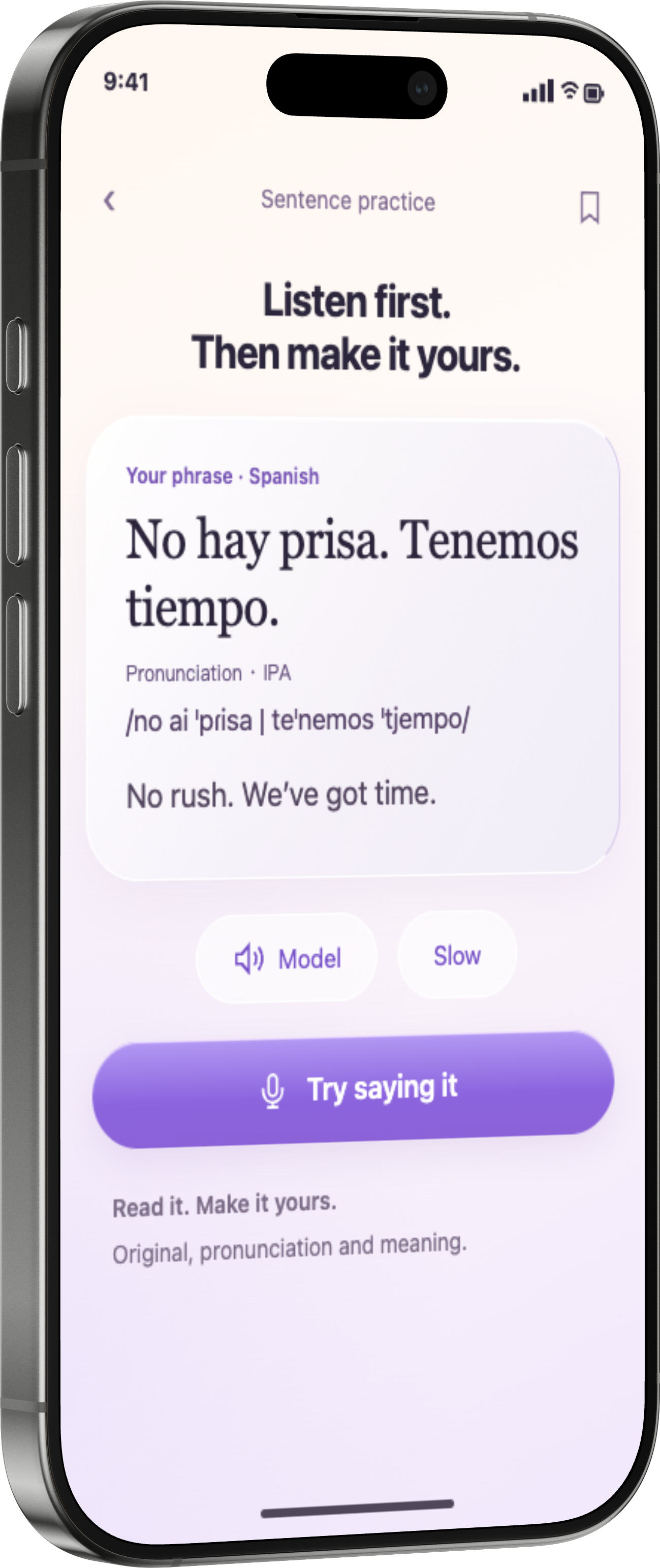
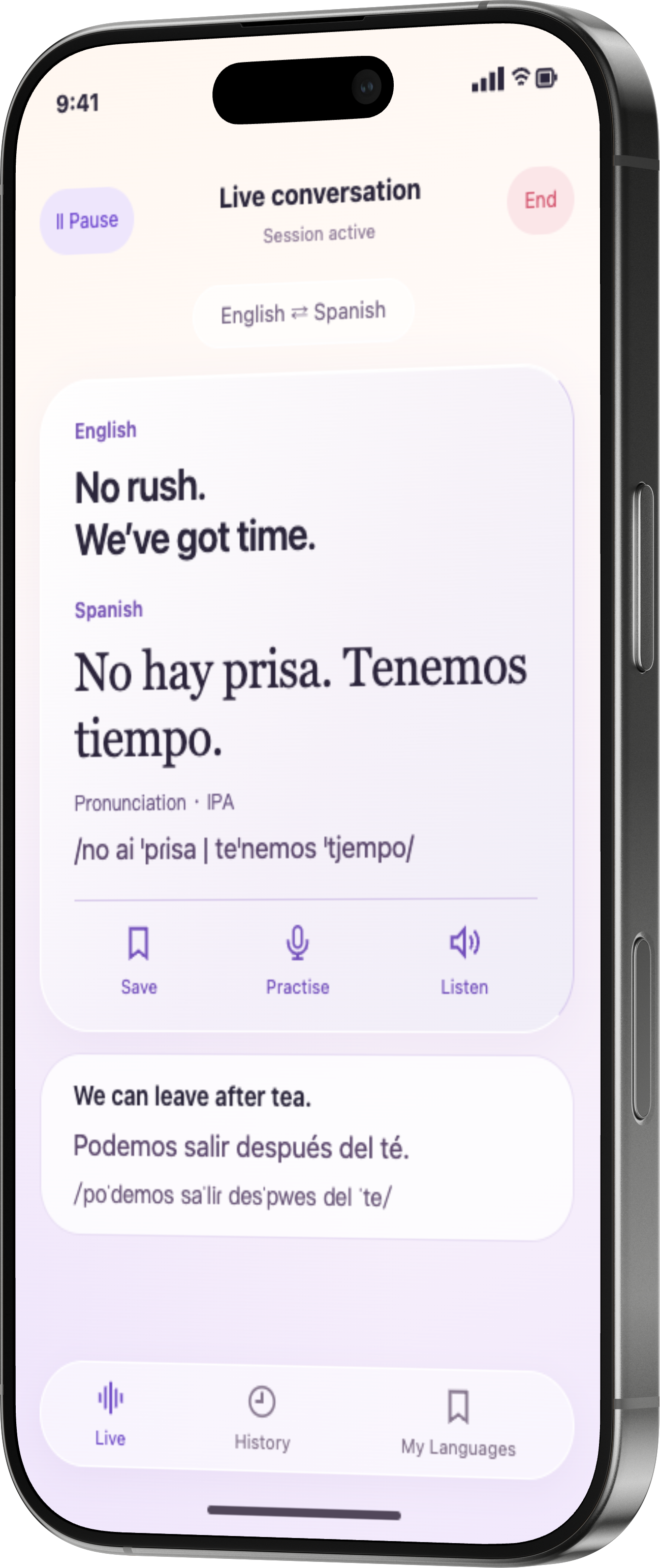
A friend in front of you. Familiar words becoming a new way to say them.
Start once, follow the exchange, pause or end when you choose.
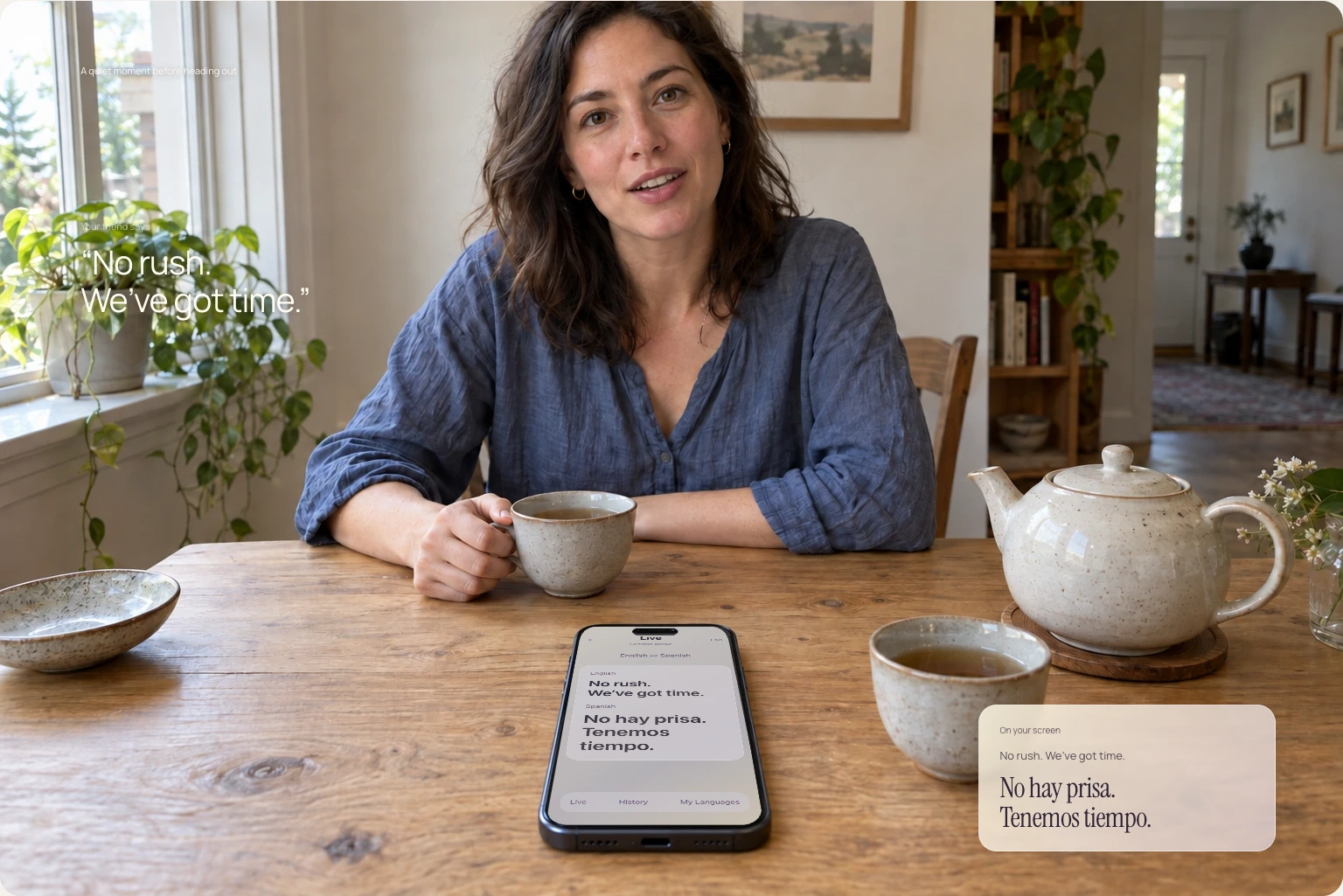
No rush.
We’ve got time.
No hay prisa.
Tenemos tiempo.
Pronunciation · IPA/no ai ˈpɾisa | teˈnemos ˈtjempo/
We can leave after tea.
Podemos salir después del té.“No rush.
We’ve got time.”
No rush. We’ve got time.
No hay prisa.
Tenemos tiempo.
Pronunciation · IPA/no ai ˈpɾisa | teˈnemos ˈtjempo/
The session is already on. Your friend’s words appear with the language you’re learning.
No need to tap for every sentence.
Just a conversation you choose to start.
The words you reach for with friends, at home, or at the end of a day.
Familiar moments. Another way to say them.
Ci sto!
Pronunciation · IPA/tʃi ˈstɔ/
I’m in!
You were calling it a night. Someone suggests another episode—and you’re already back under the blanket. A cheerful “count me in”, before you’ve even said it.

来都来了。
PinyinLái dōu lái le.
Well, we’re here now.
You came all this way for a view—and got fog. Said with a smile, this means: we’ve made the trip, so let’s enjoy what we can.

J’ai la flemme.
Pronunciation · IPA/ʒe la flɛm/
I can’t be bothered.
Your friend has running shoes. You have a blanket. A very casual way to admit you don’t feel like making the effort, with no grand excuse.
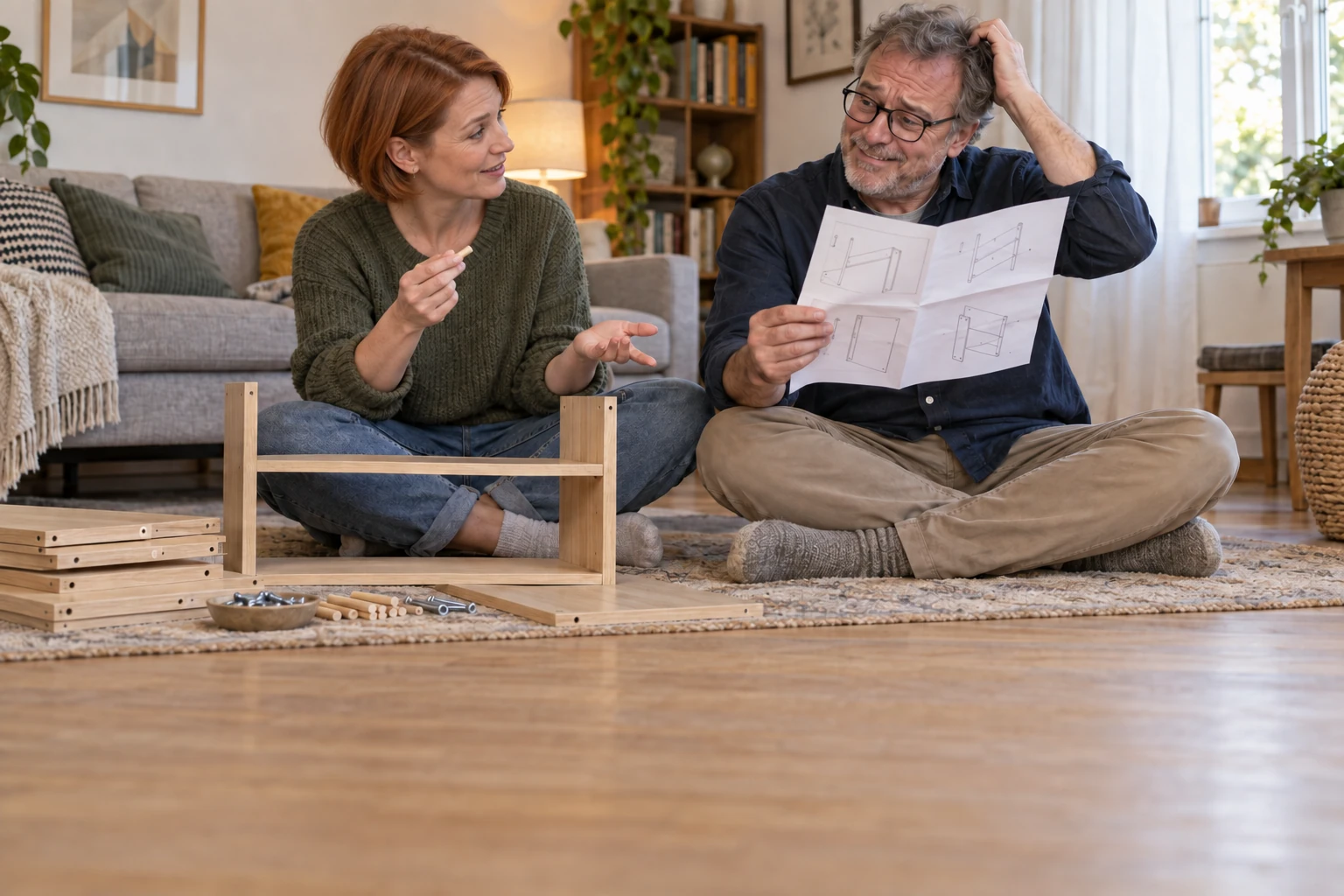
Ich verstehe nur Bahnhof.
Pronunciation · IPA/ɪç fɛɐ̯ˈʃteːə nuːɐ̯ ˈbaːnhoːf/
I’m completely lost.
The instructions get another explanation. You’re still lost. Literally “I only understand train station”, this playful idiom means none of it is making sense.
Illustrated life scenes, not user testimonials. Spanish is the example, not the limit of the learning habit.
That small reassurance from the table?
Save it on purpose. Understand it, listen, try it, and come back for another go.
Pronunciation · IPA/no ai ˈpɾisa | teˈnemos ˈtjempo/
No rush. We’ve got time.
Keep the words, and the moment behind them.
Choose this phrase. Watch it enter your collection.
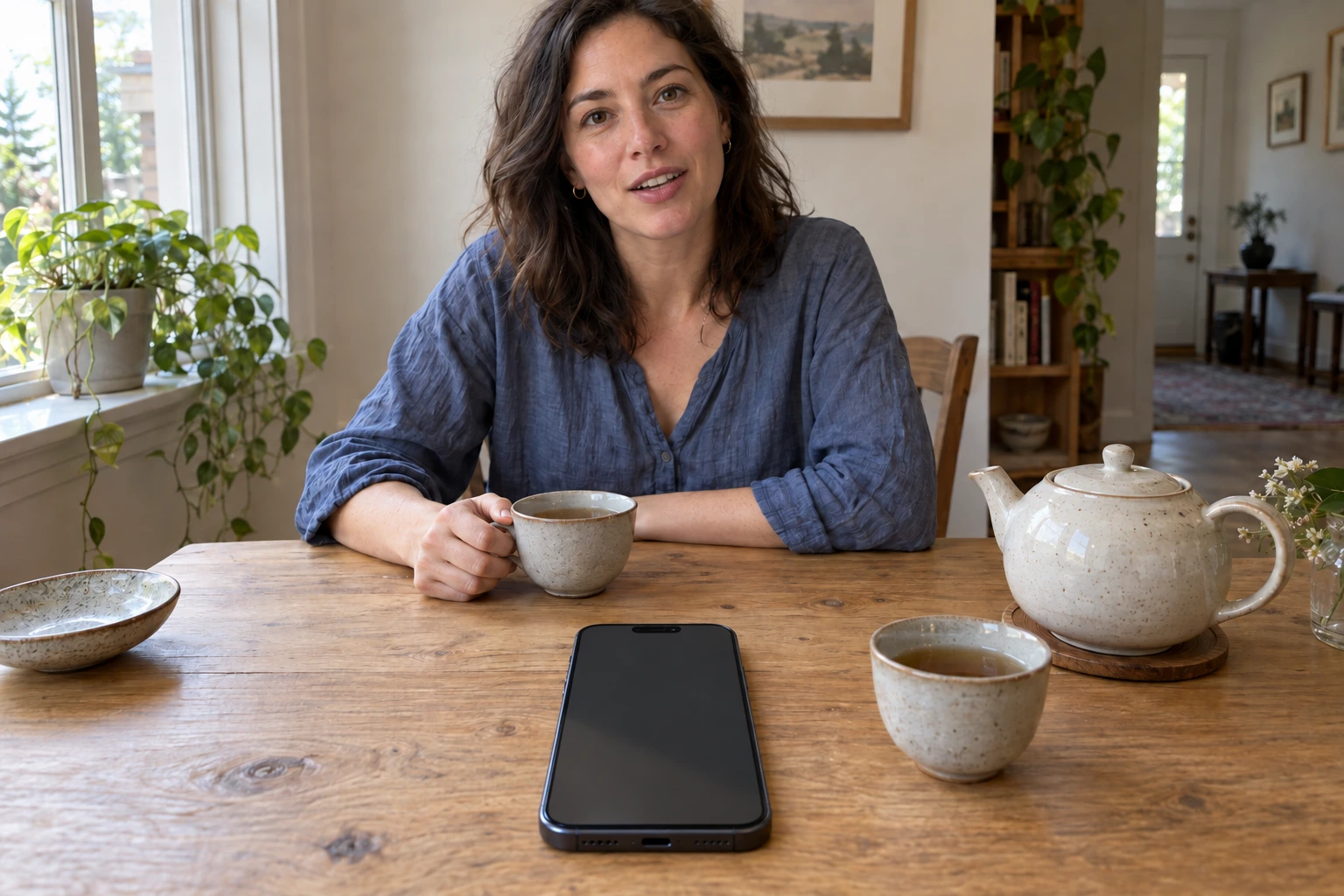
A friend lets you know there’s still time.
The same phrase, ready to use again.
Notice the pause. Then try the whole phrase.
Silent demo · sample transcript · no microphone.
Return to the same words and the feeling behind them.
Listen, try, compare. Come back when you choose.
Not a new course to finish.
A little more of your life, in another language.
A native iPhone app for bilingual conversations and learning from expressions you encounter. Translation is the beginning: understand the context, listen, try saying it, and save what matters.
No. The two phones above show two views of the same app. In the table example, you start a session on your own iPhone; your friend stays in the conversation.
No. During a conversation you actively start, the Live view follows the exchange. Use the session controls to pause or end. The scene above is a scripted illustration, not a recognition-speed measurement.
Yes. Familiar words you or a friend say can become learning material. Later, revisit your saved phrases and practise on your own.
Choose one of six edited language examples, with English to help you understand. These are reading and product-design demonstrations, not a verified release support list. Actual language availability and learning capabilities will be confirmed before public availability.
The app has conversation history and saved phrases. Keeping a phrase and practising a recording are deliberate actions, not a promise to preserve every sound forever. Processing should not be assumed to be entirely on-device; provider, retention and deletion details remain to be confirmed.
Explore preset, silent visual demonstrations based on current product and approved learning designs. This website does not use your microphone, translate your voice, collect an application or play audio. Final learning capabilities require verification against the release candidate.
Follow bilingual expressions.
Discover the useful little things you say.
Understand, listen and practise.
Return to a phrase that matters.
For the language you’re learning.
And the life you’re already living.